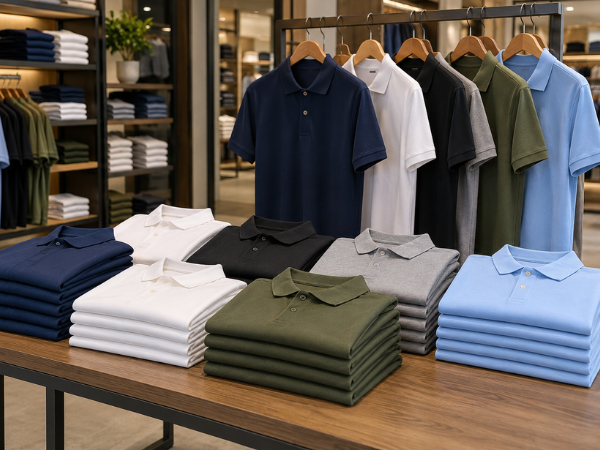
T-Shirt Fabric Guide: Cotton, Polyester, Blends and GSM Explained
Two t-shirts can look identical on a product page and feel completely different in the hand. The difference is almost always the fabric: what it is made of, how it is knitted, and how heavy it is. For anyone ordering custom tees, understanding fabric is what separates a shirt people love from one they quietly retire.
This guide explains the three fabric choices that matter most, cotton, polyester and blends, and demystifies GSM, the number that tells you how heavy a t-shirt really is.
Why fabric choice matters
Fabric decides four things you notice every time the shirt is worn: feel, breathability (which matters a lot in the UAE), durability, and print result. Get the fabric right and the branding, fit and colour all have something good to sit on.
Cotton
Cotton is the classic t-shirt fabric, soft, breathable and natural-feeling. The type affects the feel:
- Carded (open-end) cotton — the standard, durable and economical, slightly coarser.
- Combed cotton — short fibres combed out, leaving a smoother, stronger fabric.
- Ring-spun cotton — fibres twisted into a finer, softer yarn, a more premium hand-feel.
- Organic cotton — grown without synthetic pesticides, a lower-impact fibre.
Trade-offs: cotton absorbs moisture rather than wicking it, and can shrink and crease more than synthetics. For prints, it takes screen and direct-to-garment printing beautifully. Best for: everyday tees, retail pieces, soft branded merch.
Polyester
Polyester is a synthetic fibre built for performance, strong, lightweight, quick-drying, and it wicks moisture away from the skin. Its trade-off is a less natural feel than cotton, though modern performance knits have closed much of that gap. It suits sublimation printing for vivid, long-lasting results. Best for: sportswear and activewear, gym and outdoor use, team kit.
Blends
Blends mix fibres to get the best of each, and are popular for custom tees:
- Poly-cotton (often 50/50) — cotton’s softness with polyester’s durability and shrink resistance. A reliable all-rounder for uniforms and bulk orders.
- Tri-blend — cotton, polyester and usually rayon. Exceptionally soft, with a slight stretch and a lightweight, worn-in drape. A more premium feel.
Best for: uniforms, large mixed orders, everyday branded tees.
GSM explained
GSM stands for grams per square metre, the weight of the fabric, and the quickest way to judge quality and purpose. Higher GSM means a denser, heavier fabric; lower means lighter and thinner.
- Lightweight (around 130–150 GSM) — thin and airy. Good for hot conditions and giveaways, but can feel flimsy.
- Midweight (around 150–180 GSM) — the everyday sweet spot. Substantial enough to feel good and hold a print, light enough to stay comfortable.
- Heavyweight (around 180–220+ GSM) — thick, structured and durable, with a premium feel. Less suited to peak UAE summer.
GSM is not the whole story, a well-made midweight ring-spun tee can feel better than a cheap heavyweight, but it is the most useful number for comparing two shirts fairly.
How to choose: matching fabric to the job
- Everyday staff or brand tees → midweight cotton or quality poly-cotton.
- Premium or fashion pieces → heavier ring-spun cotton or a soft tri-blend.
- Sport, gym or outdoor → polyester or a performance blend.
- Promotional giveaways in bulk → a lighter weight.
- Mixed group, one order → a poly-cotton blend in a midweight GSM.
The best way to be sure is to feel the fabric yourself. Requesting a sample tells you more in ten seconds than any spec sheet. (These fabrics also matter when choosing year-end staff gifts.)
Frequently asked questions
Is cotton or polyester better for a t-shirt?
It depends on use. Cotton is softer and more breathable; polyester is more durable and wicks sweat. Blends sit in between.
What GSM is best for a t-shirt?
For most everyday tees, around 150–180 GSM. Go lighter for hot-weather giveaways, heavier for premium pieces.
What is a tri-blend t-shirt?
A blend of cotton, polyester and usually rayon, very soft, lightweight, with a slight stretch.
Which fabric is best for printing?
Cotton takes screen and DTG printing well; polyester suits sublimation.
Does higher GSM always mean better quality?
No. GSM measures weight, not quality. Fibre type and knit matter too.
Get the right fabric for your tees
The right fabric and GSM make the difference between a t-shirt people wear out and one that stays in the drawer. Times Clothing manufactures custom t-shirts and apparel in-house in the UAE, across cotton, polyester and blends and a full range of weights. Get in touch to talk through options, or request a sample to feel the fabric before you order.