
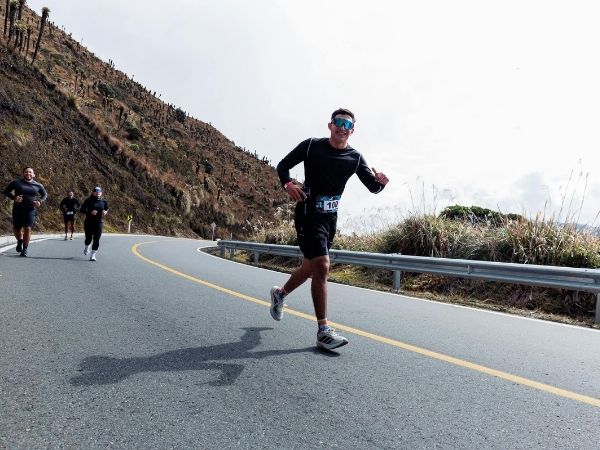
Put a cotton event tee and a proper running shirt side by side and they can look almost the same. Run 10 kilometres in each through a Dubai morning and the difference is obvious. One is soaked, heavy and rubbing at the underarms. The other is still light, drying as you move, and barely noticeable.
If you are organising a marathon, a fun run, a corporate fitness challenge or a club race in the UAE, that difference matters. The race shirt is the one item every participant keeps, wears again and is photographed in. This guide explains what actually separates a marathon t-shirt from a regular t-shirt, so you can specify the right one for your event.
A regular t-shirt is usually made from cotton or a cotton-rich blend. Cotton is soft and breathable when you are sitting still, but it absorbs sweat and holds on to it. A wet cotton shirt can feel several times heavier than a dry one, clings to the skin and takes a long time to dry.
A marathon t-shirt is built from technical synthetic fabric, most often polyester or a polyester-elastane blend. Instead of soaking up sweat, the fibres pull moisture away from the skin and spread it across the outside of the fabric, where it evaporates quickly. This is what “moisture-wicking” and “quick-dry” mean in practice.
In short, a regular t-shirt absorbs sweat and stays wet, which suits everyday wear, giveaways and casual events. A marathon t-shirt wicks sweat away, dries quickly and stays light, which is what runners need for sports days, races and outdoor activity. Running shirts also use more open knits or mesh panels, so air keeps moving through the fabric even when the runner is sweating.
GSM (grams per square metre) measures how heavy a fabric is. Our regular tees run from 180 GSM for event giveaways to 220 to 260 GSM for retail and streetwear. Those weights are great for structure and durability, but too warm for long-distance running. Performance shirts are usually lighter, so they sit comfortably and move air through the fabric.
Many race organisers now ask for recycled polyester made from plastic bottles. It performs like standard polyester and gives the event a stronger sustainability story. Ask your manufacturer which recycled options are available for your quantity.
Regular t-shirts are cut for standing, walking and everyday wear. A boxy or oversized fit looks great on the street, but extra fabric flaps, traps heat and rubs over a long run.
Marathon t-shirts use an athletic cut that follows the body without restricting it:
Over 42 kilometres, a raised seam rubbing at the underarm or shoulder can turn into painful chafing. Running shirts use flatlock stitching, which joins panels flat against each other instead of overlapping them. The result is a smooth seam that sits almost flush with the fabric. Some shirts also move seams away from high-friction areas or use tag-free printed neck labels instead of stitched ones.
A race field includes every body type, from elite runners to first-time walkers. Offer a wide size run, ask runners to choose their size at registration, and use a size chart with real garment measurements so people can pick accurately. A fit sample in each size before bulk production is the best way to avoid complaints on race day.
Beyond fabric and fit, a few extra features separate a good running shirt from a basic one:
How you print the event branding affects comfort as much as looks.
Sublimation printing turns ink into a gas that bonds into polyester fibres. The print becomes part of the fabric, so it adds no weight, does not crack and does not block breathability. It also allows full-colour, all-over designs, which is why most race shirts with bold graphics or sponsor panels use it. Sublimation works best on white or light polyester.
Screen printing lays ink on top of the fabric. It is a cost-effective choice for simple logos and works on cotton and polyester, but large solid areas of ink can feel heavy and reduce airflow on a running shirt. Keep screen-printed designs small on performance tees.
Both methods run in-house at Times Clothing, along with flatlock stitching and performance knits. Read more about our activewear manufacturing.
Before you request a quote, have these details ready:
Typical production is 10 to 15 days after sample approval, from 100 pieces per design. Build in time for sample approval and sponsor sign-off, which often takes longer than production itself. Because everything is made on our own line in the UAE, there is no overseas shipping to wait for.
Want to feel the difference first? Request samples of our performance and cotton tees, or get a quote within one business day.
You can, but cotton absorbs sweat, gets heavy and can cause chafing over long distances. For runners, a polyester performance shirt is far more comfortable.
Polyester or a polyester-elastane blend with a moisture-wicking finish. Recycled polyester performs the same way and is a popular choice for events.
Performance tees are usually lighter than regular tees, often around 120 to 160 GSM, so they stay cool and dry fast.
Sublimation, because the print becomes part of the fabric and does not affect breathability. Screen printing works for small, simple logos.
What is the minimum order for custom marathon t-shirts?
From 100 pieces per design.
How long does production take?
Typically 10 to 15 days after sample approval for standard orders, with your exact date confirmed in the quote.

WhatsApp us