
1. In-House Manufacturing vs. Sourcing Agent
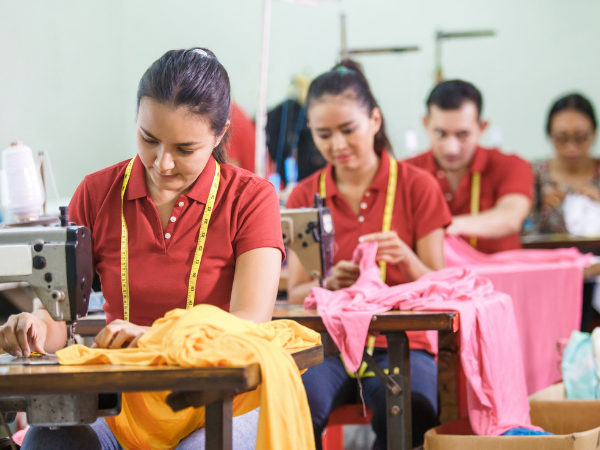
Some “manufacturers” are actually brokers who outsource your order to a third-party factory and add a margin in between. That extra layer usually means higher cost, less accountability, and slower issue resolution if something goes wrong. Ask directly: is production done in-house, and can you visit or see the facility? Manufacturers that own their production like Times Clothing’s integrated India–Dubai setup — cut out the sourcing agent, which means more transparency and better pricing.
2. Fabric Sourcing and Quality Control
Fabric is the single biggest driver of how a garment feels and lasts. Ask what quality of yarn they use (combed cotton vs. carded, for instance), how they test for shrinkage and pilling, and whether they conduct fabric-level testing such as color fastness or formaldehyde content checks. A manufacturer that can speak specifically about fabric compacting, GSM, and mercerization knows their product; one that gives vague answers doesn’t.
3. Minimum Order Quantity (MOQ)
MOQ determines whether a manufacturer is a fit for a startup testing a new line or only built for large corporate bulk orders. Low MOQ options matter enormously for private label brands and resellers who need to test demand before committing to volume.
4. Sample and Prototype Process
Never commit to bulk production without approving a physical sample first. Ask how accurate their first samples typically are a manufacturer with a strong track record on first-sample accuracy will save you weeks of back-and-forth revisions.
5. Turnaround Time
Get a realistic production timeline, not an optimistic one. A typical cycle from approved sample to delivery runs around 15–20 days for standard orders, though this shifts with order size, customization complexity, and season (peak periods like back-to-school or event season can extend timelines).
6. Customization Capabilities
Check what’s actually available in-house: screen printing, digital printing, sublimation, embroidery. A manufacturer offering multiple techniques under one roof means less coordination between vendors and more consistent quality control across your order.
7. Range of Apparel Categories
If you need t-shirts now but might add polos, hoodies, uniforms, or kidswear later, a manufacturer with a broad category range saves you from managing multiple vendor relationships as your product line grows.
8. Branding and Labeling Options
Woven labels, printed tags, custom packaging, hang tags these details are what separate a “blank garment with a logo” from a retail-ready product. Confirm what branding and labeling services are included versus outsourced.
9. Pricing Transparency
Get itemized pricing fabric, printing/embroidery, labeling, packaging rather than a single bundled number. This makes it much easier to compare quotes across manufacturers and to see where costs actually come from if you need to adjust the spec to hit a budget.
10. Quality Assurance Process During Production
Ask specifically whether quality checks happen only at the end of production or throughout (in-line inspection). End-of-line-only checks mean defects across an entire batch can go undetected until it’s too late to fix efficiently.
11. Sustainability and Compliance Practices
More UAE buyers corporate clients especially are asking about environmental compliance: waste management, energy use, safe handling of dyes and chemicals. If sustainability matters to your brand or your end client, ask what practices the manufacturer actually has in place, not just whether they claim to be “eco-friendly.”
12. Communication and After-Sales Support
Bulk apparel production has a lot of moving parts sample revisions, production updates, delivery coordination, and occasional post-delivery issues. A manufacturer who’s responsive and easy to reach throughout (not just during the sales conversation) makes a measurable difference to how smoothly your order goes.
Putting It Together
No manufacturer will score perfectly on all 12 but the factors that should never be compromised are fabric quality control, sample accuracy, and transparent pricing. Everything else is a matter of fit for your specific order size and category.
Times Clothing has been manufacturing apparel for over 25 years, with in-house production across India and Dubai, low MOQs for growing brands, in-line quality checks at every production stage, and full customization from printing to embroidery to private label branding.
Get a quote from Times Clothing and see how your requirements stack up.